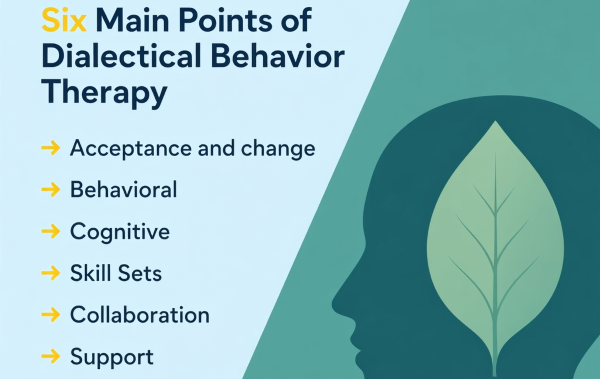
Dialectical Behavior Therapy (DBT) is an evidence-based treatment that helps individuals manage severe emotions, build healthier relationships, and develop lasting coping skills. Understanding the six main points of dialectical behavior therapy explains why it is widely used in mental health and habit-healing programs.
We treat clients with mental health and substance abuse disorders, emotional dysregulation, and co-occurring conditions. The six core components of DBT include finding emotional balance, building self-awareness, improving relationships, accepting difficult experiences, managing distress without harmful behaviors, and sustaining behavioral change. These form a proven path to lasting emotional wellness. Developed by psychologist Marsha Linehan, DBT blends acceptance strategies with practical skills to help people build a life worth living.
Key Takeaways
The six points of DBT are the core principles of dialectical behavior therapy and outline a way to change behaviors and emotions.
- The key of DBT is balancing acceptance and change.
- All DBT skills are based on the practice of mindfulness.
- Distress tolerance helps to endure a crisis safely.
- Emotion regulation helps develop healthier reactions to challenging emotions.
- Effective interpersonal skills foster communication and relationships.
DBT is a widely used treatment for addiction, trauma, depression, anxiety, and personality disorders.
Understanding Dialectical Behavior Therapy
DBT was created to work with people who suffer from chronic emotional distress and self-destructive behaviors. Research over the years has demonstrated its effectiveness in many mental health disorders, such as drug and alcohol addiction, depression, anxiety, eating disorders and trauma issues, etc.
“Dialectical” means balancing two conflicting thoughts (two “Dials”) or ideas: self-acceptance and meaningful change. This balance is the basis of the six core components of dialectical behavior therapy.
When you conduct online research about mental health therapies, you might find blog about other medical conditions, like when I looked for information on ibuprofen; I came across calls to action to find out if it’s addictive or safe to take regularly. While education about medication is key, a primary emphasis of DBT is behavioral and emotional skill building, not management of medication.
Ready to take the first step toward recovery?
Speak confidentially with our compassionate admissions team 24/7.
today.
The 6 Core Components of DBT
1. Mindfulness
At the core of DBT practice is mindfulness. It is the practice of being mindful in the here and now without judgment.
They become aware of their emotions, thoughts and experiences without being triggered by them. Mindfulness is about making conscious and deliberate responses, not impulsive reactions.
Examples include:
- Deep breathing exercises
- Body awareness practices
- Expressing thoughts verbally and/or writing them down without taking action
- Grounding strategies when experiencing emotions
Mindfulness is a required skill in DBT and many of others are harder to implement without it.
2. Distress Tolerance
Life comes with its package of pain, disappointment, and difficulties. Distress tolerance involves being able to tolerate the unpleasantness without doing something hurtful.
Rather than avoiding or distracting from distress, people are taught to deal with discomfort in a safe manner.
Some typical examples of DBT skills during distress tolerance are
- Self-soothing activities
- Radical acceptance
- Distraction techniques
- Crisis survival strategies
These can be particularly useful for people who have been in addiction recovery and had previously turned to drugs and/or alcohol to mask emotional turmoil.
3. Emotion Regulation
It is not because many people have emotions that they struggle, but because many times they may feel like the emotions are overwhelming or they feel like they cannot control the emotions.
Emotion regulation is the ability to learn to:
- Identify emotions accurately
- Understand emotional triggers
- Minimise susceptibility to over-emotional responses
- Form better emotion patterns
The most useful part of the 6 primary points of dialectical behavior therapy is to help patients realize that emotions are valuable, and that though they give information, they don’t have to rule behavior.
4. Interpersonal Effectiveness
There is a critical importance of healthy relationships both for emotional wellness and for recovery.
Interpersonal effectiveness emphasizes the development of interpersonal skills, including:
- Communicate clearly
- Set healthy boundaries
- Resolve conflicts respectfully
- Be sure to check in with them.
Keep a balance on self-value when handling challenging conversations.
These skills will positively affect family, friends, workmates and sexual relationships.
5. Acceptance and Validation
To accept is not to condone destructive circumstances. Rather, it’s recognizing reality here and now.
Validation is acknowledging and understanding emotions without judgment.
Often, a person’s context-sensitizing can be a source of great relief upon finding out that their emotions are not something to be criticized or dismissed.
If one accepts:
- One starts to change.
6. Behavioral Change and Skill Application
The final component of the six main points of dialectical behavior therapy involves putting skills into action.
DBT prompts people to try to:
- Track behaviors
- Practice skills consistently
- Identify patterns
- Develop healthier habits
- Create measurable goals
The old proverb, “You’re not doing it until you’re doing it right,” applies here.
Need Professional Support?
Rise Treatment & Recovery can help you or a loved one with emotional control, substance abuse, anxiety, depression, and/or relationship issues. Our skilled clinicians offer evidence-based treatment modalities, such as DBT-informed treatment, that foster sustainable healing and recovery.
Reach out to Rise Treatment & Recovery today to talk to a compassionate treatment specialist to learn about personalized treatment options for recovery.
You or your loved one don't have to navigate this alone.
to speak with someone who understands and get 24/7 confidential guidance.
What are the 7 key DBT Principles?
Skills may be organized in several different ways in various programs, but seven generally accepted DBT skills are:
- Mindfulness
- Distress Tolerance
- Emotion Regulation
- Interpersonal Effectiveness
- Validation
- Radical Acceptance
- Behavioral Change
These practices collectively lend themselves to an exploration of emotional struggles and fostering healthier coping strategies.
So what is the 24-hour rule in DBT Therapy?
The 24-hour rule is typically applied in crisis coaching in DBT. It typically involves clients committing to not even get into contact with their therapist for coaching in the following 24 hours after triggering into self-destructive behaviors.
The idea is not to inadvertently encourage undesirable behavior with attention but to enhance, within the lesson time, the use of skills acquired.
What are the 6 skills of DBT?
Many clinicians identify these 6 skills of dialectical behavior therapy when discussing the 6 main points of DBT.
- Mindfulness
- Distress Tolerance
- Emotion Regulation
- Interpersonal Effectiveness
- Acceptance
- Behavioral Change
These skills collaborate to help sustain emotional stability and better decision-making.
Does DBT Work for Schizophrenia?
DBT is not a first-line intervention for schizophrenia. But some principles and techniques from DBT can assist people in controlling emotional distress, enhancing interpersonal functioning and minimizing impulsive actions other than medication and particular psychiatric care.
When appropriate, some mental health professionals incorporate DBT skills into other treatment plans.
To learn the principles and techniques of DBT
Several underlying principles and techniques make DBT so effective:
- Acceptance and change
- Validation
- Skill development
- Behavioral analysis
- Mindfulness practice
- Problem-solving
- Emotional awareness
Such methods provide a plan and framework in which to engage in desired personal changes.
DBT Skills Examples
Examples of practical DBT skills are:
- Use the power of deep breathing in times of conflict.
- Grounding techniques during anxiety
- How to practice radical acceptance in challenging circumstances
- Establishing appropriate personal limits
- Challenging impulsive reactions
- Using mindfulness before making important decisions
DBT Interventions List
Elements of common DBT interventions are listed:
- Individual therapy
- Skills training groups
- Mindfulness exercises
- Behavioral chain analysis
- Crisis coaching
- Homework assignments
- Emotional regulation training
- Interpersonal effectiveness exercises
Here are the steps on how to start DBT therapy:
Generally, DBT therapy begins with the following:
- Completing an assessment.
- Identifying treatment goals.
- Taking part in individual therapy sessions.
- Participating in DBT skills groups.
- Practicing skills consistently.
- Progress monitoring.
When DBT skills are delivered by professionals who are trained expert mental health providers, the skills are imparted accurately and effectively.

The first step toward healing is to take it.
There is no need to face emotional difficulties, addiction recovery or mental health struggles alone. Every member of the staff at Rise Treatment & Recovery will strive to use evidence-based treatment methods to help people develop resilience, enhance emotional wellness, and bring lasting change.
Call Rise Treatment & Recovery today and discover the way that DBT-informed treatment can help on your journey toward a healthier, more fulfilling life.
Help and Healing Begin with a Single Call
Whether you’re reaching out for yourself or a loved one, we are here to listen with clarity and care. Get free, 24/7 guidance with zero obligation.
Speak with Admissions Now:
Disclaimer
This blog is intended for educational and informational purposes only and should not be considered medical advice, diagnosis, or treatment. Always consult a qualified healthcare professional or licensed mental health provider regarding specific mental health, addiction, or medical concerns.
Frequently Asked Questions
What are the six main points of dialectical behavior therapy?
The six main points of dialectical behavior therapy include mindfulness, distress tolerance, emotion regulation, interpersonal effectiveness, acceptance, and behavioral change. Together, these skills help individuals manage emotions, improve relationships, and develop healthier coping strategies.
How long does DBT therapy usually take?
DBT programs typically last between six months and one year, depending on individual needs. Some people continue practicing DBT skills longer to strengthen emotional resilience, improve relationships, and maintain progress achieved during treatment.
Is DBT effective for addiction recovery?
Yes. DBT can help individuals identify triggers, regulate emotions, tolerate distress, and reduce impulsive behaviors. These skills often support long-term recovery and help prevent relapse when incorporated into comprehensive addiction treatment programs.
Can DBT be used for anxiety and depression?
DBT has shown benefits for many people experiencing anxiety and depression. The therapy teaches emotional regulation, mindfulness, and coping skills that can reduce emotional distress while improving daily functioning and overall well-being.
Do I need group therapy to learn DBT?
Many DBT programs include both individual and group sessions. Group training provides opportunities to practice skills, receive feedback, and learn from others, while individual therapy focuses on personal challenges and treatment goals.
References
- Verywell Mind. Dialectical Behavior Therapy (DBT): What It Is and How It Works.
- National Institute of Mental Health (NIMH).
- Substance Abuse and Mental Health Services Administration (SAMHSA).