
The answer to how long it will take to rewire the brain from addiction is individual; most people will find that they feel better in the early stages of quitting the addiction, which takes some time, mostly within a matter of a few weeks. Rewiring of the brain with respect to its reward function would normally last about 12 to 18 months and could take several months to a few years.
The timeline will include the substance used, how long the person used it, health and mental illness that was going on and supports and treatment received. This healing recovery is possible at any age as the brain has a healing mechanism and can form new pathways (neuroplasticity).
When a person or loved one recently quit drinking or drugging, one of the initial questions they’ll have is how long it takes to rewire the mind from addiction. So it’s a perfectly good question to ask. The good news is healing begins almost as soon as you start; your brain is not only capable of change, but it is capable of a lot of it. The forthright answer to that is that there’s no one fixed due date; however, there is a reasonably predictable curve, and understanding it can make the entire process appear much less overwhelming.
Key Takeaways
- Early changes often occur in mood, sleep and thinking within the first weeks after the onset of drug withdrawal.
- It takes 12-18 months, for example, to have a major change in a brain reward process.
- Returning to normal can take months to years, depending on the substance used, the duration of use and factors of the individual.
- A new healthy pathway can be formed anytime in the brain and this is known as neuroplasticity.
- Healing is promoted faster and better with the help of exercise, sleep, food, therapy and the community.
- If you want to become knowledgeable on the impact of addiction on the mind.
How Drugs and Alcohol Change Your Brain
Most people think addiction is a matter of willpower. It is not. It is a brain disease, and once you understand what is actually happening inside your head, everything starts to make more sense.
Your brain has a built-in reward system. When you eat a good meal, go for a run, or laugh with someone you love, your brain releases a chemical called dopamine. That feeling of warmth or joy? That is dopamine doing its job.
Drugs and alcohol steal that system. They flood your brain with dopamine levels no natural experience can match. The more this happens, the more your brain protects itself by becoming less sensitive to dopamine overall.
This is how tolerance forms. The substance that once made you feel euphoric barely makes you feel okay. And the simple pleasures of everyday life stop registering the way they used to.
Three major areas of the brain that are involved in addiction take the biggest hit:
- Basal Ganglia: your pleasure and reward center, now wired to crave the substance above everything else
- Amygdala: your emotional stress manager, now stuck in anxiety without the substance
- Prefrontal Cortex: the decision-making part of your brain, now significantly weakened
This is why quitting feels impossible. Not because you are weak, but because the part of your brain responsible for saying no has been compromised.
Why Drug and Alcohol Cravings Come Back Even Years Later
You can be sober for years and still get hit with a craving out of nowhere. That is not a failure. That is your brain doing exactly what it was conditioned to do.
Addiction programs your brain to connect certain people, places, feelings, and times of day with substance use. These are called triggers. For many people in Florida, where recovery often means navigating familiar environments and old social circles, triggers can feel impossible to avoid.
A specific song. A stressful afternoon. Even a quiet evening alone can activate a craving that feels completely involuntary. Because it is.
Part of rewiring your brain from addiction is learning to recognize them before they catch you off guard.
That is exactly what the team at Rise Treatment and Recovery helps you do.
Call us at (302) 367-5064 today for a confidential consultation. Real support, no pressure, just answers.
The Timeline of Brain Recovery
Brain healing begins the moment you try to quit, but it occurs in multiple stages; everyone takes a little bit of a different route.
Changes are the greatest during the first month. Withdrawal symptoms begin in the first week as your brain chemistry is reordered and are most intense a few days into the process. After that, many people will start to produce better thought patterns and sleep habits, and temper and appetite may alter; swings are normal during this phase.
Your brain starts making new pathways which are healthier from months 2-12. Now you start to feel less stressed and more energized, and your dopamine system starts to respond to the normal things you experience: eating, exercising, and spending time with loved ones.
Many people experience significant memory, concentration and emotional regulation for 1 year and perhaps more. As the new patterns take hold, cravings fade and are easier to control.
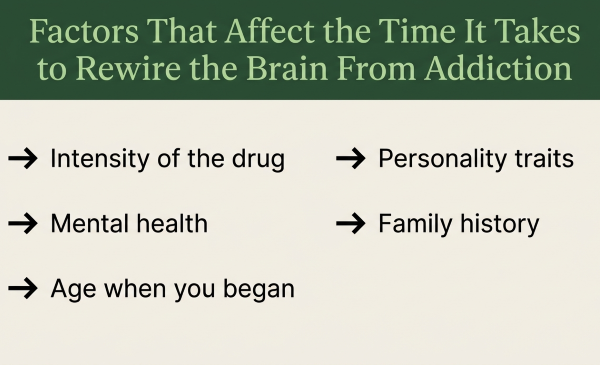
There are a few aspects to it that will affect how fast it happens: the magnitude of substances, the duration of use, the healthiness of the body, and whether or not any other mental health disorders exist. With good assistance and treatment, the road to a happy end can be shortened, meaning.
Stages of Brain Rewiring
The brain will actually go through similar stages as a physical injury.
- Stage 1: Withdrawal. Upon arrival, the most difficult stage will be when a person’s brain gets used to operating without substances. Symptoms usually persist for a week or so, and for certain drugs, it is medically important, as the withdrawal could be hazardous.
- Stage 2: Early recovery. Cravings appear to fade and your mind develops a more receptive and open mindset to cope with life in new ways. Take advantage of the opportunity to learn how to manage stress and seek counseling or join support groups.
- Stage 3: Long-term healing. Neural pathways stay healthy and continue to normalize. Urges to eat diminish and day by day of abstinence continues to strengthen all the well-begun work.
Supporting Your Brain’s Recovery
The recovery process is similar to taking care of a garden, so much so that the more faithful you are to its needs, the more it will flourish. Here are a couple of things that you can do to make a difference every day:
- Movement: Your brain begins to relearn it and even a 15-minute walk puts out the same feel-good chemicals. Don’t put yourself in a torture regimen; choose something you like.
- Sleep: Much of the repair is when you are at rest, so one of the effective measures you take is to stick to a regular sleep routine.
- Nutrition: Your brain needs to rebuild, and whole foods provide it with the raw materials, such as the fruits and vegetables that provide nutrients to the brain, along with protein to help rebuild.
- Stress management: Any activity that calms an overstimulated nervous system will work; try deep breathing, listening to music, or chatting with a good friend.
- New routines: Pick 1 or 2 simple, bite-sized things to do, and gradually increase the behavior.
Neuroplasticity proves that recovery is possible; you don’t have to navigate it alone.
Speak with an admissions specialist now at (302) 367-5064 to begin your personalized healing journey.
Treatment Options That Help Rewire the Brain
This doesn’t need to be handled alone and there is actually true, fast healing with the help of professionals. Cognitive behavioral therapy is particularly useful because it can assist you in challenging your negative thoughts, which may be perpetuating your drug abuse and help you change them. An excellent therapist will also assist you in identifying your triggers as well as work out techniques to handle them in your daily life.
Another important thing support groups provide: a sense of community to people who know how you feel. Practical lifestyle changes, which have to be done one by one, complete a recovery toolkit. The best way to rewire the brain from addiction is with the right sort of support.
The Science of Hope and Healing
Here’s the best news of all: Your brain can make new connections and adapt, and that’s its ability to do so throughout your life. This is the key to recovery no matter how long you have been struggling. You can see it in the brain: With time, you can see measurable change in memory, the control of impulses, decisions made and emotional control of people in recovery.
It can be beneficial to view recovery as a marathon and not a sprint. It will be tougher some days, healing takes a while and celebrating the small successes keeps you moving forward.

Getting Help and Support
It takes courage to take that first step, but it is worthwhile, because what’s on the other side is a good life. There are a variety of treatment options available to you, from medically supervised detox to face-to-face outpatient programs to residential treatment, so there is something available that fits your needs and circumstances. Also great is a personal support system or network: family, friends, counselors, and others in recovery who are ready to be there for you during difficult times.
Don’t do this on your own. Rise Treatment & Recovery provides proven and compassionate treatment for the brain and your life. Call our (302) 367-5064 admissions team today to get treatment advice and to begin recovery right away.
Disclaimer
This blog is for informational and educational purposes only and is not a substitute for professional medical advice, diagnosis, or treatment. Recovery timelines vary from person to person. Always consult a qualified healthcare provider regarding any questions about a medical condition or treatment. If you or someone you know is in crisis, call 911, the SAMHSA National Helpline at 1-800-662-4357, or the 988 Suicide & Crisis Lifeline by dialing 988.
Frequently Asked Questions
How long does it take to rewire your brain from addiction?
It varies by person, but significant changes often occur within 12 to 18 months. Early improvements can appear within weeks, while full recovery may take years depending on the substance, duration of use, and lifestyle changes.
Can dopamine levels return to normal after addiction?
Yes. The brain gradually restores its natural dopamine balance through healthy activities like exercise, good nutrition, and stress management. This process can take several months to a few years, but it does happen with consistency and time.
How long does it take to rewire your brain from a bad habit?
Rewiring a habit can take anywhere from about 21 days to several months, depending on how intense and ingrained it is. Consistently practicing new behaviors and avoiding old triggers helps make the change stick long term.
Can brains recover from addiction?
Yes. Through neuroplasticity, the brain can heal itself and form new pathways. While addiction alters brain structure and function, recovery is genuinely possible with time, therapy, and healthy habits that support ongoing brain repair.
How long does recovery from addiction take?
Recovery is an ongoing process that unfolds in stages. Withdrawal may last days to weeks, but brain healing continues for months or even years. Long-term recovery depends on individual factors and continued support.